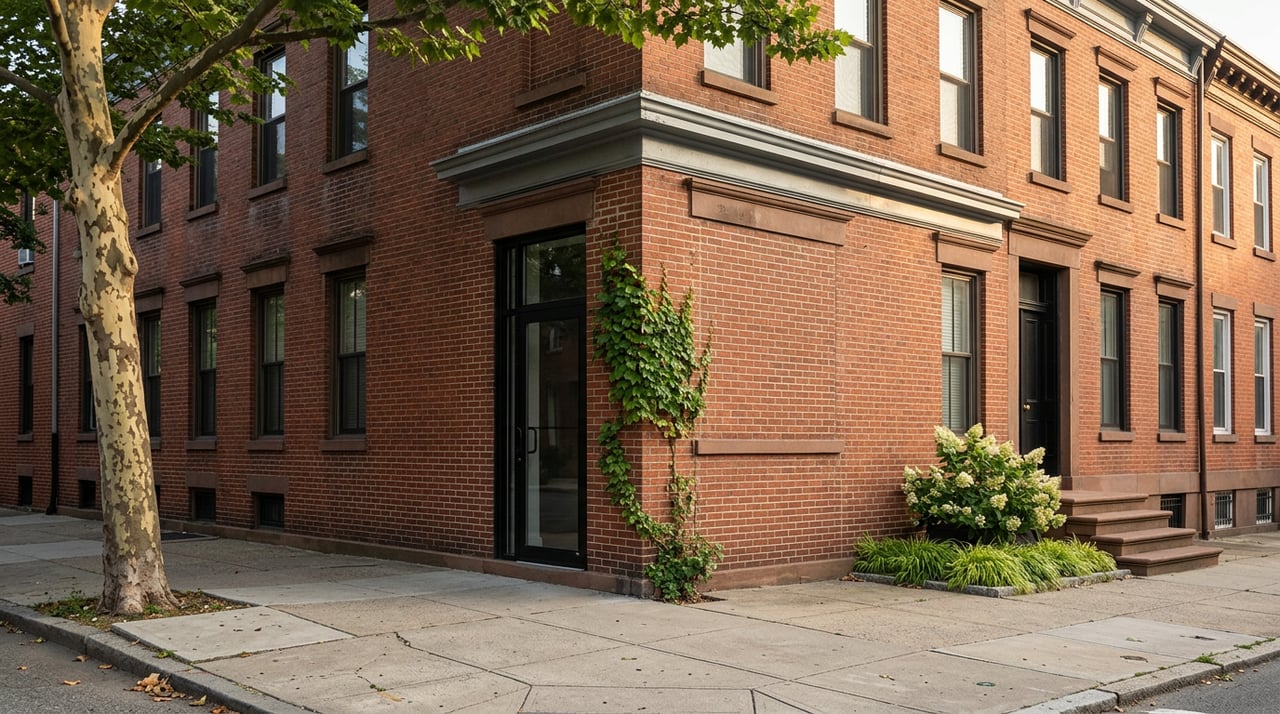
Walk any block between Atlantic Avenue and Eastern Parkway this summer and the same thing keeps happening. A sidewalk shed comes down, a sales office opens, and a listing goes up with a monthly carrying cost that looks impossibly low for the square footage. Somewhere in the offering plan, a tax abatement is doing the heavy lifting. Which program, for how long, and on what schedule is the question that decides whether the number holds.
Crown Heights' median condo sale price ran up 75.7% year over year to $1.3M as of April 2026, per PropertyShark. That headline reads like a straight appreciation story. It isn't. YIMBY documented six recently completed Crown Heights buildings adding a combined 230 rental and condo units in a single June 2026 tour, with nine more projects underway that will add 520+ additional units between Atlantic Avenue and Eastern Parkway. The median moved because the mix moved. New, larger, amenitized units are finally closing in volume. What a buyer actually needs to verify is which of those units will still pencil in year eight, year fifteen, and year thirty.
The abatement question that changes the monthly number
Almost every new condo listing in Crown Heights sits inside one of three tax scenarios, and the differences are worth thousands of dollars a month once the phase-out begins.
The first is a 421-a legacy building, meaning construction commenced before June 15, 2022, when the program expired. These are still closing today because the abatement runs from completion, not from filing. Owners in these buildings pay taxes on a small fraction of assessed value in the early years, with the exemption stepping down toward full taxation over the final phase of the term.
The second is a 485-x building, the Affordable Neighborhoods for New Yorkers program adopted in April 2024. For condos, the state law and HPD rules impose real constraints: the project must sit outside Manhattan, the average assessed value per square foot cannot exceed $89 upon first assessment, and every buyer must sign a written commitment to keep the unit as a primary residence for at least five years from closing. That last point is the one buyers routinely miss, and it directly affects any pied-à-terre, rental, or short-hold strategy.
The third is no abatement at all. Small brownstone conversions and boutique buildings often fall here, especially where developers took a pre-existing structure and reworked more than the 49% floor-area threshold that separates renovation from an eligible conversion under the 485-x rules.
| Scenario | Typical Crown Heights fit | What the buyer verifies |
|---|---|---|
| 421-a legacy (pre-6/15/22 start) | Larger ground-up rentals-turned-condos and mid-2020s deliveries | Years remaining, phase-out schedule, DOF exemption record |
| 485-x (2022–2038 window) | New six-plus unit condo projects outside Manhattan under the $89/sf cap | Primary-residence attestation, affordability restrictions, benefit term (10, 20, 35, or 40 years) |
| No abatement | Small brownstone conversions, boutique resales | Full Class 2 assessed tax already baked into current common charges |
The verification path is the same for all three. Pull the exemption record at the NYC Department of Finance property inquiry portal, then request the abatement schedule directly from the offering plan, which is filed with the New York State Attorney General's office. Cross-check the DOF record against the offering plan; if the term or start year differs, that discrepancy needs an answer before the contract is signed.
Reading the phase-out from the offering plan
An abatement doesn't end on a single day. It steps down. That is the number that matters, and it is buried in the offering plan rather than the listing.
The right exercise is to model the tax line at three points: year one, the midpoint of the phase-out, and the first year at full taxation. A buyer who runs those three numbers understands whether the current common charges are a floor or a ceiling. In practice, a phase-out that begins on a Class 2 assessment carrying a $1.3M market value can push the monthly tax line up by several hundred to well over a thousand dollars once fully burned off. The listing shows year one. The mortgage lender underwrites year one. The resale buyer, six or ten years later, is looking at a very different sheet.
For legacy 421-a buildings, this modeling is especially important because the abatement clock started before the sale. A resale unit advertising a 421-a benefit might have eight years left, not twenty-five. That distinction sets the sale price a rational buyer should offer.
Sponsor sale mechanics that shift costs to the buyer
A first-sale condo is almost never a mirror of a resale. In a sponsor deal, several closing-cost items that a resale buyer would never see are typically pushed to the buyer side of the table. The most consequential:
- NYC and NYS transfer taxes, which combined can run over 1.8% on contracts above $500,000 in Brooklyn.
- The New York State mansion tax, which begins at 1% on contracts of $1M and up and scales higher above $2M. Given the current Crown Heights new-development price range, most units cross this threshold.
- Sponsor's attorney fee, often a flat charge in the low four figures.
- Working capital contribution to the condo, usually two months of common charges.
Layered on top are temporary sponsor incentives. Several Crown Heights new-development listings this spring advertised "sponsor pays two years of common charges" for contracts signed by an early deadline (April 30 or May 31, 2026, on multiple public listing pages). These are real, but they compress the negotiation window. A buyer weighing an incentive-driven offer needs to confirm the contract-signing deadline in writing, understand what happens if the closing itself slips past the deadline, and price the incentive against the transfer-tax hit the buyer is absorbing on the sponsor's behalf.
TCO, PCO, and closing on an unfinished building
Many Crown Heights deliveries this year are closing on a Temporary Certificate of Occupancy rather than a Permanent Certificate of Occupancy. A TCO is legal for closing and financing in most cases, but each TCO has an expiration date, must be renewed by the sponsor, and can be conditioned on the completion of open work items. Buyers should confirm that the offering plan obligates the sponsor to secure the PCO within a defined window, that the punch list is documented at walk-through, and that the sponsor's post-closing warranty tracks the actual construction, not a boilerplate schedule. This is the part of the transaction where legal review pays for itself several times over, and it is the reason Josiane Lysius is on nearly every one of these deals with our buyers.
Ground-up vs. brownstone conversion: two different Crown Heights condos
The pipeline sorts into two very different products. Recognizing which one a listing represents changes the entire due-diligence checklist.
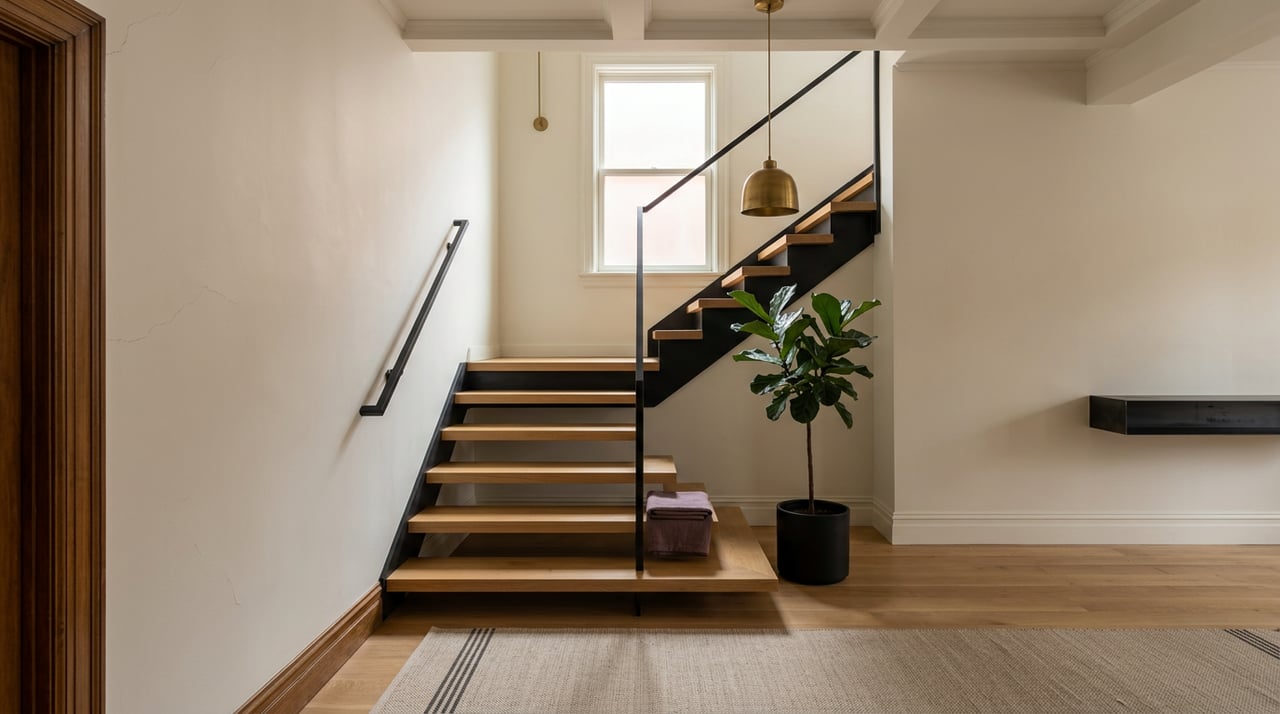
Ground-up buildings cluster along Atlantic Avenue, Nostrand Avenue, Classon Avenue, and the wider streets. Prosper Brooklyn at 1042 Atlantic, The Eve at 827 Sterling Place, 755 Washington Avenue, and The Arcadian at 975 Nostrand fall in this category. These tend to carry more amenities, elevator service, structured parking, and rooftop terraces. They also tend to carry the tax abatements that make the monthly math work in the early years.
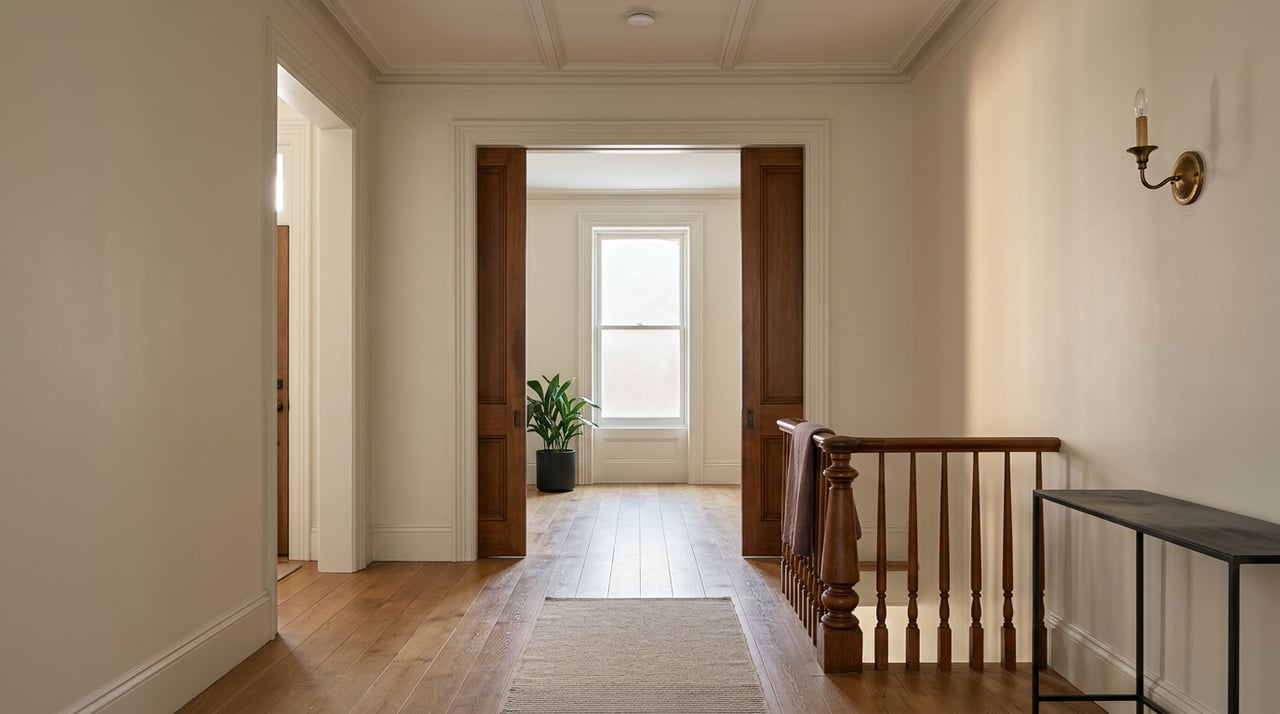
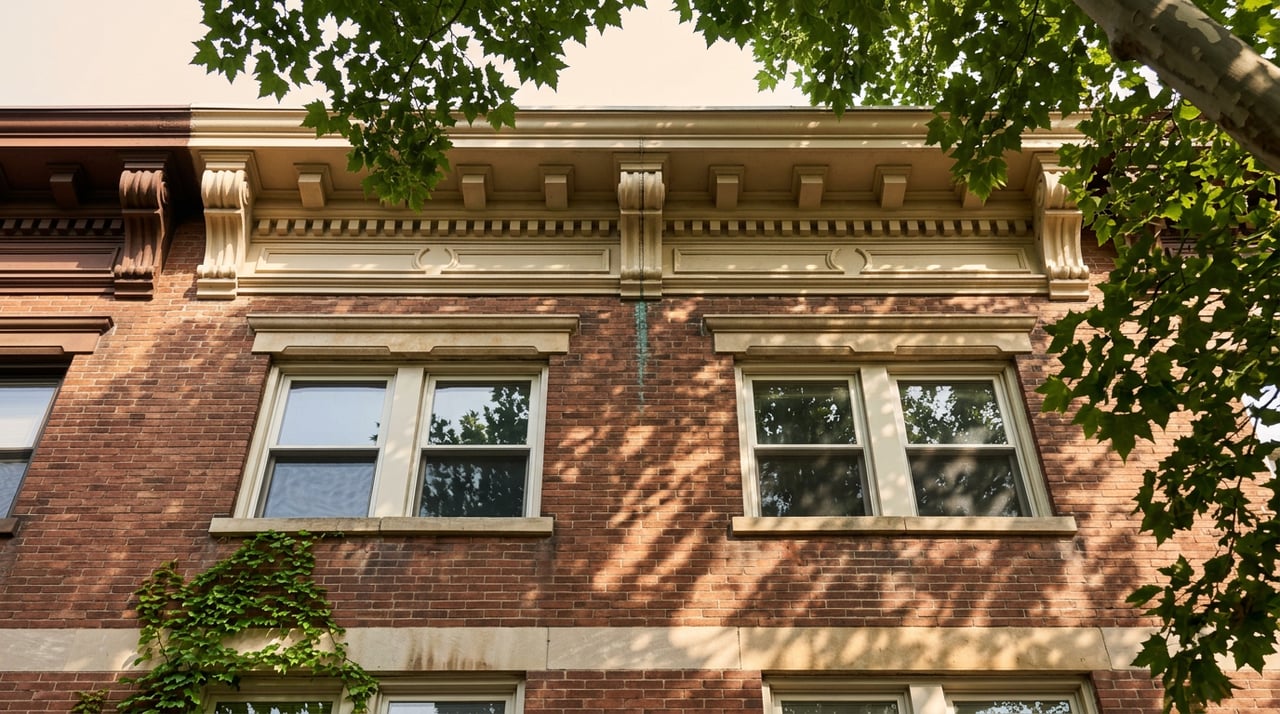
Brownstone-conversion condos occupy the historic interior blocks. 582 Park Place, 1479 Sterling Place, 810 Sterling Place, 749 Park Place, and 1372 Dean Street, the "Castle" building featured in past New York Times coverage of Crown Heights architecture, are recent examples. These often have four to twelve units, no elevator, minimal amenities, and frequently no abatement at all. What they offer instead is architectural continuity with the block, higher ceilings, and, for the right buyer, resale demand that is not correlated with the amenity race happening two avenues away.
Neither is inherently better. They answer different questions.
How June 2026 rates change the math
The rate environment is not helping. Average 30-year jumbo mortgage rates were running in the 6.5% to 6.7% range as of late June 2026, according to widely tracked lender surveys, following the Federal Reserve's June 17 decision to hold its benchmark rate at 3.50% to 3.75% for a fourth straight meeting. For a Crown Heights buyer stress-testing an abated unit, the sensitivity is asymmetric. The mortgage payment is fixed on day one. The tax line is not. When both rise together, the year-ten carrying cost can look nothing like the year-one listing sheet.
Which is why the underwriting exercise on any new Crown Heights condo should be run at year one, at midpoint of the abatement phase-out, and at full taxation, using today's rate. If all three still work, the building is a real candidate. If only year one works, the listing is telling a story that the offering plan quietly contradicts.
FAQ
Does a 485-x building require me to live there full-time? For condo units under the 485-x program, the state law requires each owner to sign a written commitment to keep the unit as a primary residence for at least five years from the closing date. If your plan includes renting the unit out or holding it as a second home, the building is likely not the right fit.
How do I confirm the abatement is actually in place before I make an offer? Search the address on the NYC Department of Finance property inquiry portal at propertyinquiry.finance.nyc.gov. The exemptions section will list the active program and dates. Cross-check against the offering plan, which is on file with the New York State Attorney General's real estate finance bureau.
Are "sponsor pays common charges" incentives worth chasing? Sometimes. Model the incentive against the buyer-side transfer taxes and mansion tax you are absorbing in a sponsor deal. If the incentive is roughly equal to those costs, the pricing is fair. If it is much smaller, the sponsor is asking the buyer to subsidize the closing table.
Why did the Crown Heights condo median jump so much year over year? The neighborhood delivered a large batch of new, larger units into a market that had been running on resale inventory. That mix shift pulls the median up mechanically, even if per-square-foot pricing on any given resale unit is close to flat.
If you are weighing a specific Crown Heights new development against a converted brownstone condo, or you want a second read on an abatement schedule before you sign, the Dima Lysius Team will sit down with the offering plan, the DOF record, and your rate lock and model the three carrying-cost scenarios that matter. Contact Us to start.