In March 2026, Redfin reported Bed-Stuy's median sale price at $1.6M, up 33.5% year over year, while the median price per square foot fell 23.8% to $764. Days on market ran to 112, up from 77 the year before. A reader looking at those three numbers together is being told two contradictory stories about the same neighborhood.
The contradiction resolves once you stop treating Bed-Stuy as a single market and start treating it as a set of building types priced on very different logic. The March data is not describing a neighborhood that got 33% more expensive. It is describing a mix shift toward larger two-, three-, and four-family townhouses, and the financing rules that make those buildings unusually accessible in Kings County.
What the March split is really measuring
A median price rises when bigger properties dominate the closed pool. A price per square foot falls when those bigger properties trade at a discount to the small-unit stock on a per-foot basis, which is what happens when four-story multi-family townhouses replace renovated single-family homes and small condos in the sample. The days-on-market jump to 112 fits the same story. Multi-family townhouses require underwriting on unit counts, leases, and legal use before an offer can even be structured, and that adds weeks to every deal.
Median price up. Price per square foot down. Days on market up. Read together, these describe a market where the deals closing are larger, more complex, and priced against income rather than against comps.
That reframing is the whole thesis of this post. If you are shopping Bed-Stuy in 2026, you are not shopping a neighborhood with a 33% appreciation tailwind. You are shopping a housing stock that rewards buyers who can price a building the way a lender does.
The Kings County financing inversion
The mechanism most buyer guides skip is the interaction between FHA and conforming loan limits at the unit-count level. For 2026 in Kings County (Brooklyn), the published limits look like this:
| Units | 2026 FHA limit | 2026 Conforming limit |
|---|---|---|
| 1 | $1,249,125 | $1,209,750 |
| 2 | $1,599,375 | $1,548,975 |
| 3 | $1,933,200 | $1,872,225 |
| 4 | $2,402,625 | $2,326,875 |
Two things stand out. First, Brooklyn is one of the few U.S. markets where the FHA ceiling actually exceeds the conforming ceiling, by $39,375 on a one-unit purchase. Second, the four-unit FHA limit sits at $2.4M, which is inside the price band where fully renovated Bed-Stuy multi-family townhouses actually trade. Recent asks include 521 Monroe at $2,825,000 (two-family, mansard-roofed), 757 Putnam at $3,195,000 (two-family with garden flat), 82 Chauncey at $2,295,000 (an 1889 Amzi Hill-designed two-family), 198 Putnam at 3,341 square feet configured as a two-family, and 508 Madison at $3,495,000 with a garden rental and solar. A buyer with 3.5% down and adequate reserves can, in principle, use FHA financing on a two-unit Bed-Stuy townhouse up to nearly $1.6M in loan amount, with lenders permitted to count 75% of projected market rent from the non-occupied unit toward qualifying income.
That last rule is where the "same neighborhood, different math" idea lives. A buyer looking at a $1.6M single-family in Bed-Stuy qualifies on their personal income alone. A buyer looking at a $1.8M two-family down the block qualifies on their personal income plus 75% of what the garden apartment will rent for. Same block, same architectural character, entirely different affordability curves. You can verify current-year limits on HUD's official FHA Mortgage Limits lookup before making an offer.
Where three units become a different transaction than four
FHA's occupancy rule is simple. Move in within 60 days of closing and hold the unit as a primary residence for at least twelve months. What is less obvious is that at three and four units, FHA layers on a self-sufficiency test. Seventy-five percent of the total market rent from all units, including the one the buyer intends to occupy, must be equal to or greater than the full monthly payment of principal, interest, taxes, and insurance.
For a three-family in prime Bed-Stuy priced at $2.1M with three modest garden and floor-through rentals, that math is often tight. It is not a rule that keeps deals from closing so much as a rule that reprices them. Sellers of triplexes and fourplexes with soft rents face a smaller buyer pool than sellers of the same building with market-rate leases, because the FHA path narrows as the gap between contract rent and market rent widens. This is why two identical-looking brownstones two doors apart can price differently: one has leases that pass the test, one does not.
The tax-class line the listing photos never show
NYC Department of Finance splits residential property into classes for assessment. Class 1 covers most residential property with up to three units. Class 2 covers 4- to 6-unit rental buildings and larger residential types. For tax year 2026, the Class 1 rate is 19.843%, applied to a low assessment ratio, which produces the famously modest property tax bills on three-family brownstones. A four-unit building, marketed under the same "small multifamily" heading, flips into Class 2 and carries a different rate and assessment methodology.
The practical version of this rule: the second decision a Bed-Stuy buyer makes, after neighborhood and block, is whether to stop at three units. The financial gap between a legal three-family and a legal four-family is not just one more rent check. It is a category change in how the building is taxed for the entire hold period. Current property tax rates are published on the NYC Department of Finance property tax rates page.
The Certificate of Occupancy trap
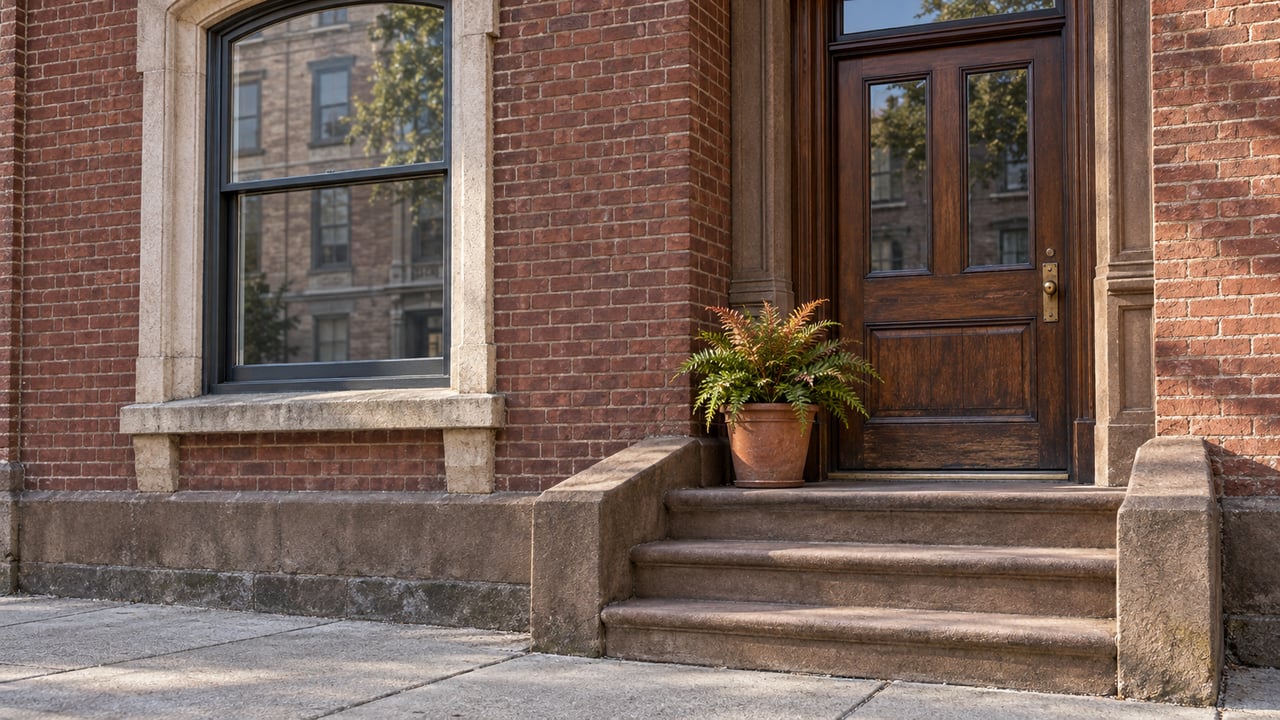
Here is the friction that catches the most Bed-Stuy buyers off guard, and it lives entirely on paper. Listings routinely describe a brownstone as "two-family with owner's duplex over garden rental" or "legal three-family, easy conversion to four." The marketed layout and the legal use are frequently not the same document.
The NYC Department of Buildings Certificate of Occupancy states the legal use and permitted occupancy of a building. For buildings constructed before 1938, which describes most of central Bed-Stuy's row-house stock, a Certificate of Occupancy may not exist unless a later alteration changed the use, egress, or occupancy. A three-family with no C of O and no letter of no objection is not automatically illegal, but it is also not automatically what the listing says it is. That gap creates two live risks a buyer needs to price before the offer.
The first is financing risk. Lenders underwriting to unit count will pull DOB records. A discrepancy between the marketed configuration and the DOB records can force a mid-diligence renegotiation, a legalization contingency, or a walk. The second is income risk. Renting an unauthorized unit can eliminate the owner's ability to collect rent during the illegal occupancy period, along with other consequences under state law. The New York Attorney General's Residential Tenants' Rights Guide is a plain-language starting point for the rent regulation and registration questions that come with any Bed-Stuy purchase where an existing tenant is in place.
There is also a rent-regulation overlay. For leases starting on or after October 1, 2025 through September 30, 2026, the New York City Rent Guidelines Board authorized increases of up to 3% on one-year renewals and 4.5% on two-year renewals for rent-stabilized units. Not every Bed-Stuy small multifamily has stabilized units, but the neighborhood's older stock and complex regulatory history mean a unit-by-unit DHCR history check belongs in every diligence file.
What this changes about the shortlist
Once the split-data story is understood as a mix-shift story, three practical shortlist rules follow.
First, price two-families against the FHA two-unit ceiling and the rental income of the non-occupied unit, not against the neighborhood single-family median. A $1.6M two-family and a $1.6M single-family are not comparable financial instruments.
Second, treat the jump from three to four units as a category change, not an incremental one. If the goal is passive income above owner-occupancy, the four-unit path opens up. If the goal is Class 1 tax treatment and FHA-friendly financing, the three-unit ceiling is a real number.
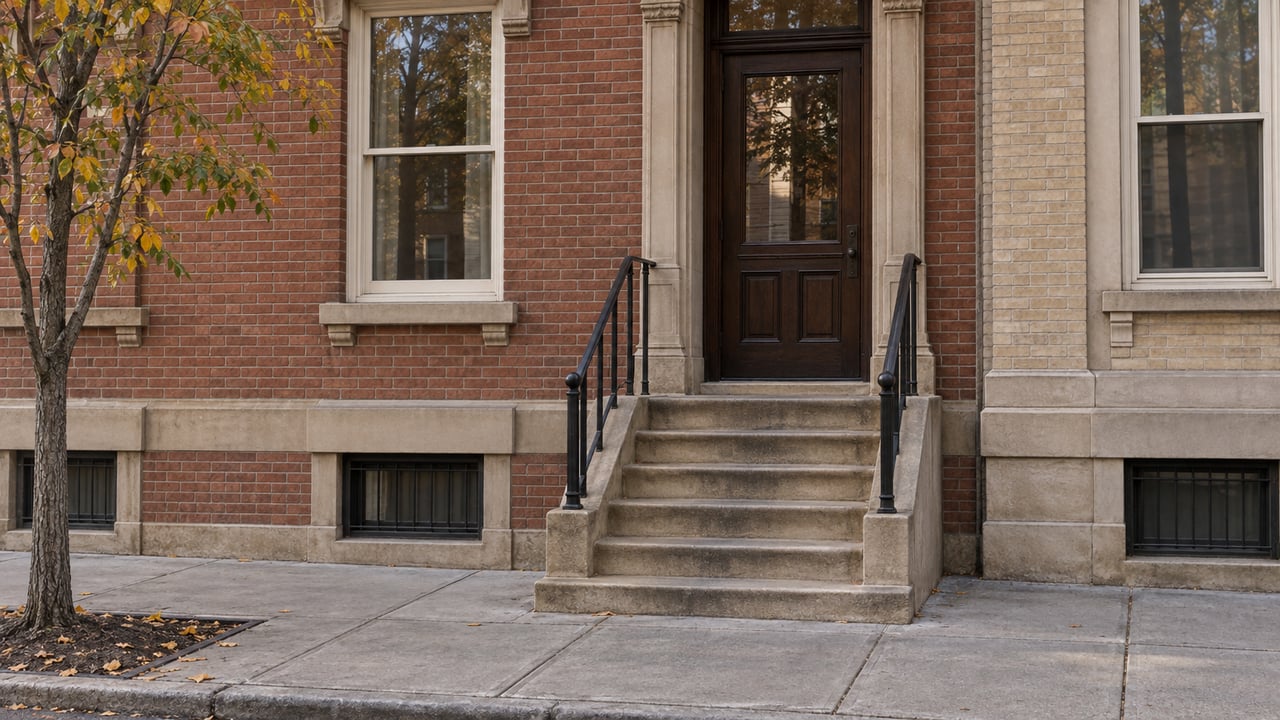
Third, verify legal use before falling in love. The stoop, the parlor, and the garden flat sell themselves. The Certificate of Occupancy and DHCR history are what protect the price.
FAQ
Is an FHA loan actually usable on a $2M Bed-Stuy two-family? Yes, within the 2026 Kings County FHA two-unit limit of $1,599,375, assuming the buyer occupies one unit for at least twelve months and the property meets FHA appraisal standards. The 203(k) program can bundle renovation costs into the same loan for eligible properties.
Why did days on market climb to 112 in March 2026? The larger, more complex multi-family townhouses driving the median require diligence on leases, unit legality, DHCR history, and Certificates of Occupancy. Those steps add calendar weeks that a single-family condo transaction does not carry.
Does landmark status change any of this? It shapes what renovation work is allowed, not how the building is financed or taxed. Portions of Bed-Stuy sit inside the Stuyvesant Heights and Bedford Historic Districts, which the Landmarks Preservation Commission regulates for exterior work. Legal use, tax class, and loan limits are governed separately.
If you are weighing a Bed-Stuy two-, three-, or four-family purchase in 2026 and want the unit count, tax class, and financing path pressure-tested before you offer, Joseph Dima and the Dima Lysius Team work these deals on both sides of the transaction. Contact Us to start with a diligence review of a specific building.