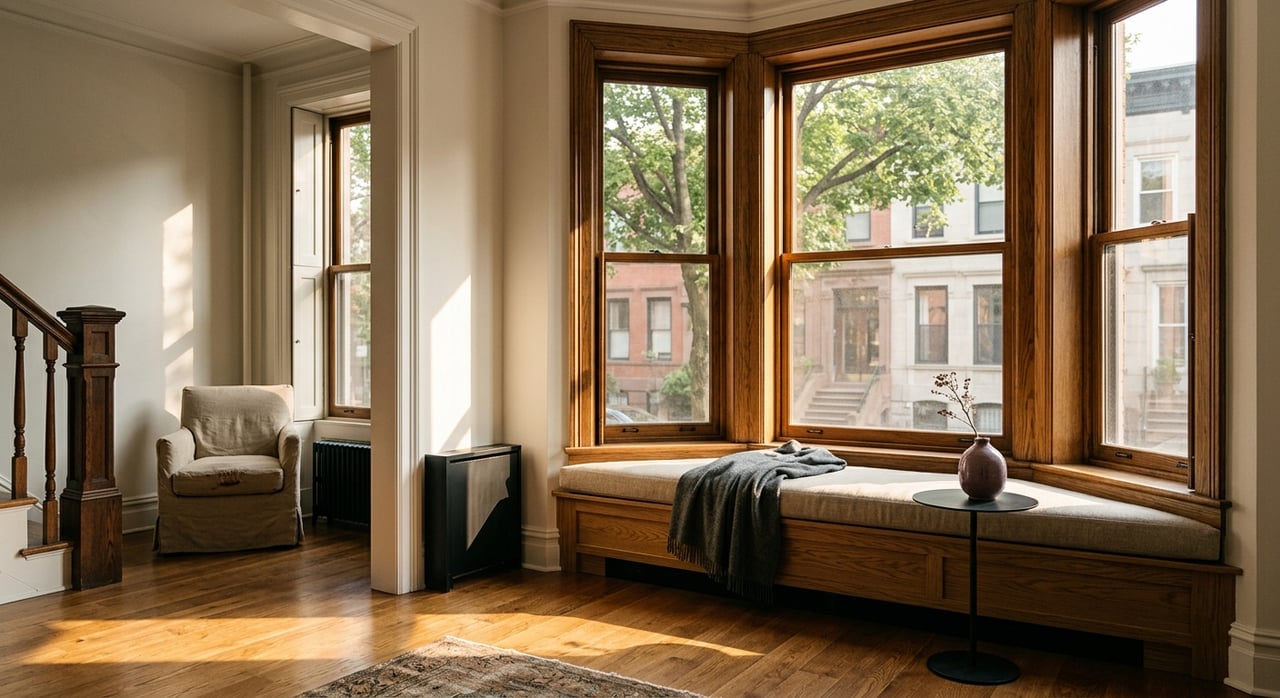
If you are trying to picture daily life in Crown Heights, it helps to look beyond a simple list of restaurants or landmarks. What makes this part of Brooklyn stand out is how food, culture, parks, libraries, and transit fit into one connected routine. Whether you are planning a move or just getting to know the neighborhood better, this guide will help you understand how a typical day can unfold here. Let’s dive in.
Crown Heights at a glance
Crown Heights sits in central Brooklyn and is often described as split into North and South by Eastern Parkway. City planning materials describe it as a largely residential neighborhood with brownstones, row houses, apartment buildings, churches, public institutions, and a strong mix of community and cultural assets.
That physical layout matters because it shapes how the neighborhood feels day to day. Instead of one single commercial strip or one defining attraction, Crown Heights offers a mix of residential blocks, local businesses, civic spaces, and cultural destinations that support everyday routines.
Food fits the full day
One of the easiest ways to understand Crown Heights is through its range of food and coffee options. The neighborhood does not point to just one signature dish or one type of dining experience. Instead, it supports different moods and schedules from morning coffee to late dinner.
That variety makes the area feel practical as well as interesting. You can build a day around quick stops, sit-down meals, or a slower weekend brunch without needing to leave the neighborhood.
Morning coffee and easy starts
If you like starting your day with coffee or a casual breakfast, Crown Heights offers several options that fit into a weekday routine. Cafe Imael on St. Johns Place opens at 8 a.m. on weekdays and serves coffee, pastries, and brunch-style fare.
Cordelia, near Bergen and Franklin, adds another version of the morning stop. It functions as a bookstore cafe earlier in the day, which gives it a different kind of everyday appeal for readers, remote workers, or anyone easing into the morning.
Brunch and midday options
As the day moves on, the neighborhood’s food scene opens up even more. Safta on Franklin Avenue serves Mediterranean and Middle Eastern food, with breakfast available daily from 11 a.m. to 4 p.m.
Rue Dix describes itself as a French-Senegalese cafe, restaurant, and bar with brunch and an all-day menu. Lakou Cafe in Weeksville adds Haitian-American fusion, coffee, smoothies, and vegan-friendly food with long daily hours.
Taken together, these businesses show how Crown Heights supports flexible daytime routines. You are not limited to a quick grab-and-go model. You can meet a friend, work for a bit from a cafe, or make lunch part of a slower neighborhood afternoon.
Dinner and evening rhythm
Crown Heights also transitions smoothly into the evening. Safta serves dinner Tuesday through Sunday until 10 p.m., while Rue Dix combines restaurant and bar energy in one place.
Cordelia shifts from bookstore cafe to wine bar at night, which reflects a broader neighborhood pattern. The local rhythm is not just about daytime convenience. It also gives you places to wind down close to home.
Culture is part of everyday life
Crown Heights is not only a food neighborhood. Its cultural institutions are part of what gives the area real depth and a strong identity. For many people, that matters just as much as restaurants or coffee shops when deciding whether a neighborhood feels livable.
Here, culture is woven into regular life. Museums, heritage sites, libraries, and public events create reasons to engage with the neighborhood throughout the week, not only on special occasions.
Brooklyn Children's Museum and family routines
Brooklyn Children's Museum is one of the neighborhood’s major anchors. The museum says it was founded in 1899 as the world’s first children’s museum and is New York City’s largest cultural institution designed especially for families.
It is proudly based in Crown Heights and serves 300,000 children and caregivers annually. For families considering the area, that points to more than a destination for occasional visits. It signals a neighborhood with established family-oriented cultural infrastructure.
Weeksville and local history
Weeksville Heritage Center adds another important layer. It preserves the history of Weeksville, one of the largest free Black communities in pre-Civil War America.
That presence gives Crown Heights a strong connection to Brooklyn history and to broader stories of community building and cultural preservation. If you value neighborhoods with visible historical depth, this is a meaningful part of the local fabric.
Eastern Parkway institutions and annual events
The broader Eastern Parkway corridor adds even more to the neighborhood experience. The Brooklyn Museum is located at 200 Eastern Parkway, and Brooklyn Botanic Garden has an entrance at 150 Eastern Parkway.
Eastern Parkway also hosts the annual West Indian American Day Parade, which current city guidance says runs westbound from Rochester Avenue to Grand Army Plaza. This helps explain why Crown Heights can feel lively and culturally significant well beyond its residential blocks.
Parks and public space support daily routines
A neighborhood works best when everyday outdoor space is easy to access. In Crown Heights, Brower Park fills that role. NYC Parks describes it as being in the heart of the neighborhood, and its features support a wide range of uses.
The park includes grassy picnic space, children’s play areas, a skate park, two full-court basketball courts, a Monarch Butterfly Garden, and Shirley Chisholm Circle. That mix makes it useful for short breaks, family outings, and casual meetups.
Brower Park for nearby downtime
Brower Park helps balance the busier parts of neighborhood life. If your day includes errands, transit, work, or school pickups, having a local green space nearby can make a real difference.
It also reinforces the idea that Crown Heights is active beyond restaurant hours. Public space here is not an afterthought. It is part of how people spend time in the neighborhood.
Prospect Park for bigger weekends
For longer outdoor time, Prospect Park adds another layer of convenience. NYC Parks describes it as offering 350 acres of natural areas, woodlands, waterways, and Brooklyn’s last remaining upland forest.
That gives Crown Heights residents access to both smaller local park routines and bigger weekend outings. In practical terms, you can think of Brower Park as the quick everyday option and Prospect Park as the larger escape when you want more room to roam.
Libraries add practical everyday value
Libraries are easy to overlook in neighborhood guides, but they often say a lot about how a place functions day to day. In Crown Heights, they are part of the local routine and community infrastructure.
Brooklyn Public Library says Brower Park Library was created through a partnership with Brooklyn Children's Museum to maintain a public library presence in Crown Heights. BPL also describes Crown Heights Library as a community gathering place with computer courses, arts and crafts classes, Reading Is Fundamental, and Kids' Tech Time programs.
Why this matters for daily life
For families, students, and remote workers, these kinds of spaces add real flexibility. They offer another place to read, work, learn, or spend part of the day without needing a major plan.
When you combine libraries with parks, cafes, and cultural institutions, Crown Heights starts to look less like a neighborhood of isolated amenities and more like a place where your regular routines can overlap in a convenient way.
Transit keeps the neighborhood connected
Transit access is one of Crown Heights’ strongest practical advantages. The MTA identifies Eastern Parkway-Brooklyn Museum as an ADA-accessible 2 and 3 station, and Franklin Av-Medgar Evers College as a 4 and 5 station.
The Franklin Avenue Shuttle provides full-time service between the A and C at Franklin Av and Fulton St and the Q at Prospect Park and Empire Blvd, with a free transfer to the 2, 3, 4, and 5 at Botanic Garden and Eastern Parkway. The MTA also identifies the B44 Select Bus Service on Nostrand, Rogers, and Bedford Avenues as a major Brooklyn corridor.
What transit means for your routine
In lifestyle terms, this means many residents can rely heavily on public transit for weekday travel. That can shape everything from your morning commute to how you plan dinner, errands, or a museum visit.
It also adds to the neighborhood’s sense of practicality. In Crown Heights, food, culture, public space, and transit overlap in a way that lets you move through the day without constantly resetting your schedule.
Why Crown Heights feels so livable
The clearest takeaway is that Crown Heights supports a layered, realistic version of Brooklyn life. You can picture coffee in the morning, a library or museum stop in the afternoon, time in Brower Park, dinner nearby, and a transit connection that keeps the rest of the city accessible.
That kind of everyday ease matters when you are choosing where to live. A neighborhood does not need one defining attraction to feel compelling. Sometimes the real value is in how well the pieces fit together.
If you are comparing Brooklyn neighborhoods, Crown Heights stands out for this reason. It combines residential character with strong cultural infrastructure, useful public space, varied dining, and reliable transit in one compact setting.
If you are thinking about buying or selling in Crown Heights or nearby Brooklyn neighborhoods, working with a team that understands how block-by-block lifestyle connects to long-term real estate decisions can make a real difference. Reach out to Joseph Dima for clear, local guidance.
FAQs
What is Crown Heights known for in everyday life?
- Crown Heights is known for a mix of residential blocks, varied food options, cultural institutions, public libraries, parks, and strong transit access that support daily routines.
What food options are available in Crown Heights?
- Crown Heights offers a range of options across the day, including coffee, pastries, brunch, Mediterranean and Middle Eastern food, French-Senegalese dining, Haitian-American fusion, smoothies, vegan-friendly meals, and evening wine bar settings.
What cultural institutions are located in Crown Heights?
- Major cultural anchors include Brooklyn Children's Museum and Weeksville Heritage Center, with the Brooklyn Museum and Brooklyn Botanic Garden also located along the nearby Eastern Parkway corridor.
What parks serve Crown Heights residents?
- Brower Park is a key neighborhood park with picnic space, play areas, a skate park, basketball courts, a butterfly garden, and Shirley Chisholm Circle, while Prospect Park offers larger-scale outdoor space nearby.
What transit options connect Crown Heights to the rest of Brooklyn and beyond?
- Crown Heights is served by the 2, 3, 4, and 5 trains, the Franklin Avenue Shuttle, and the B44 Select Bus Service, giving residents multiple ways to travel through Brooklyn and connect to other parts of the city.
Why do buyers consider Crown Heights when moving within Brooklyn?
- Buyers often look at Crown Heights because it offers a practical combination of neighborhood character, cultural depth, everyday amenities, public space, and transit convenience.