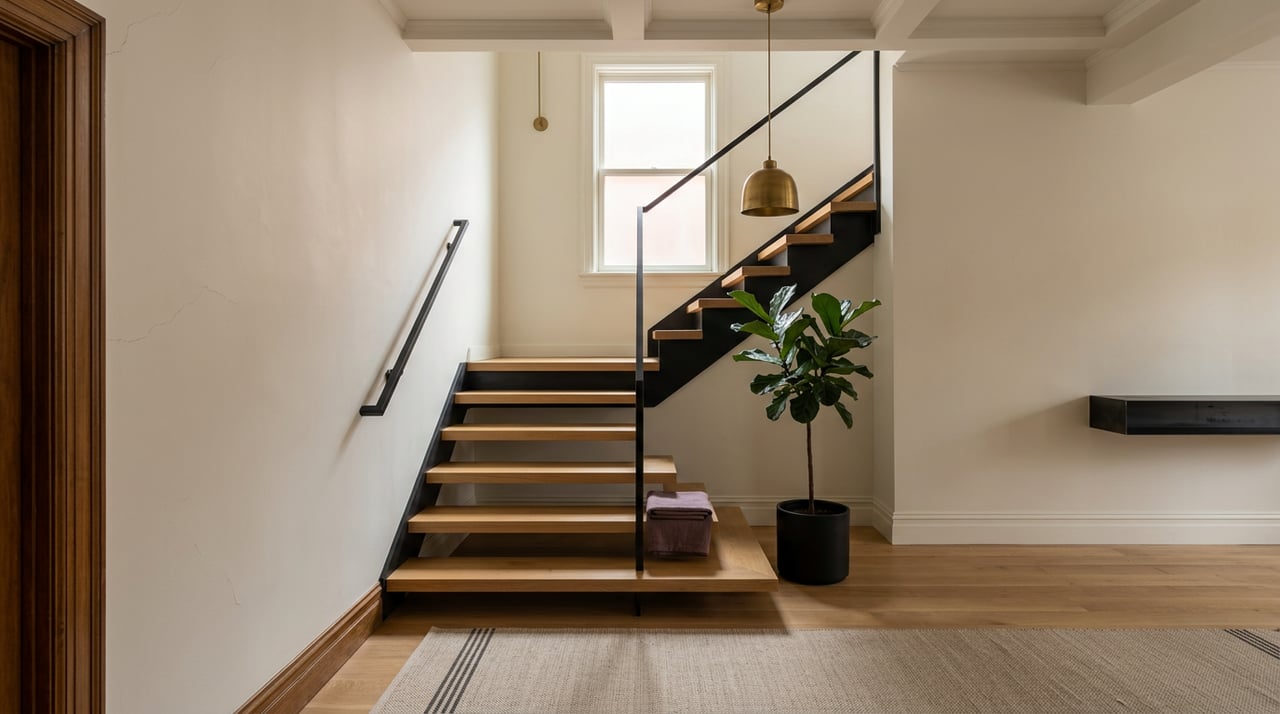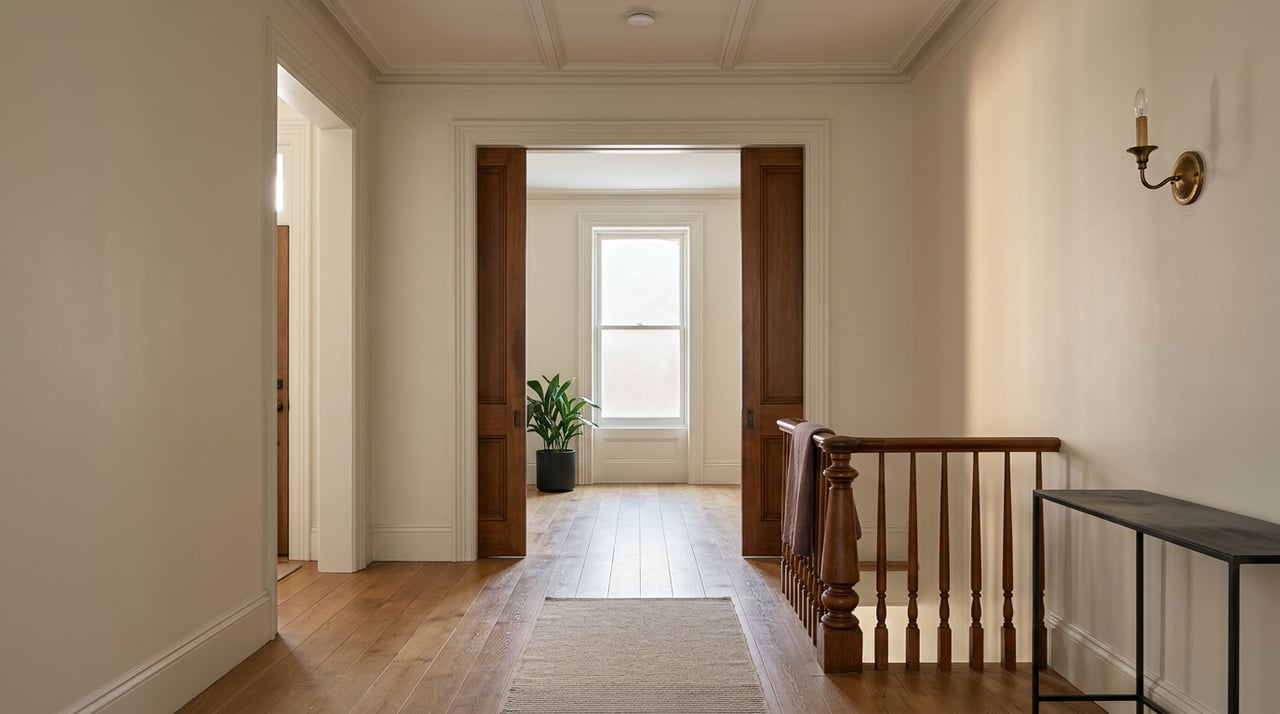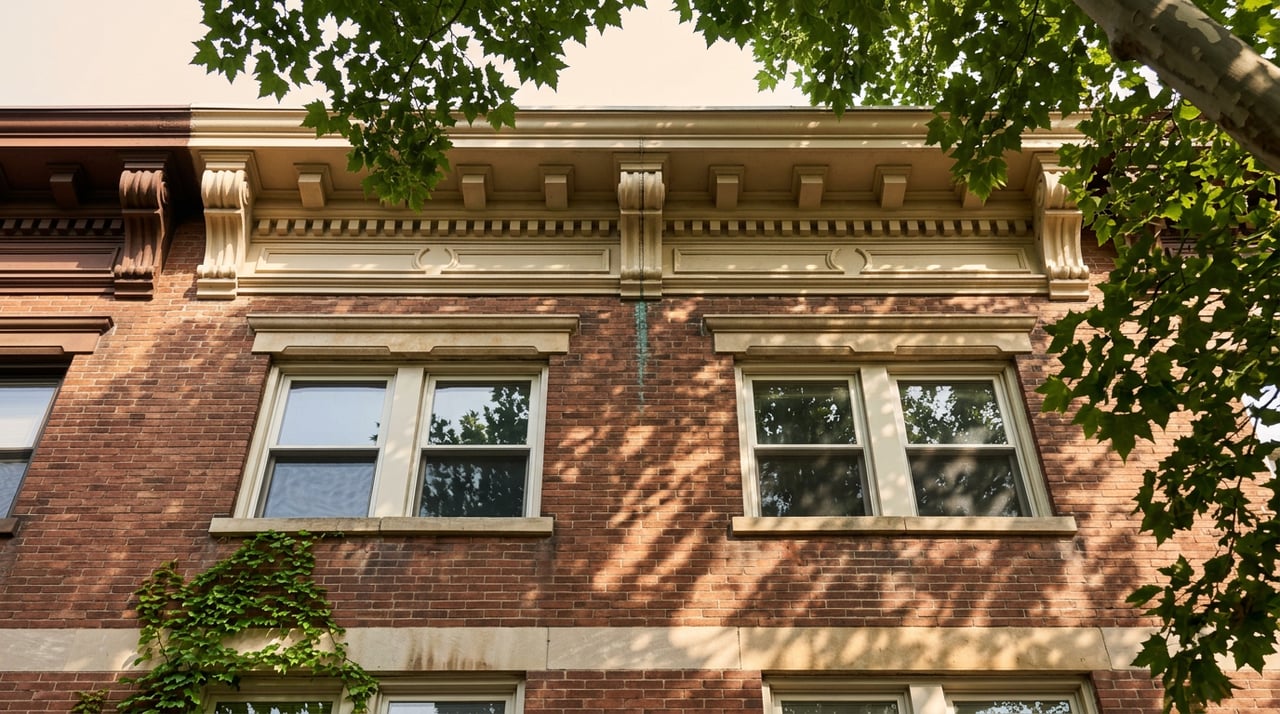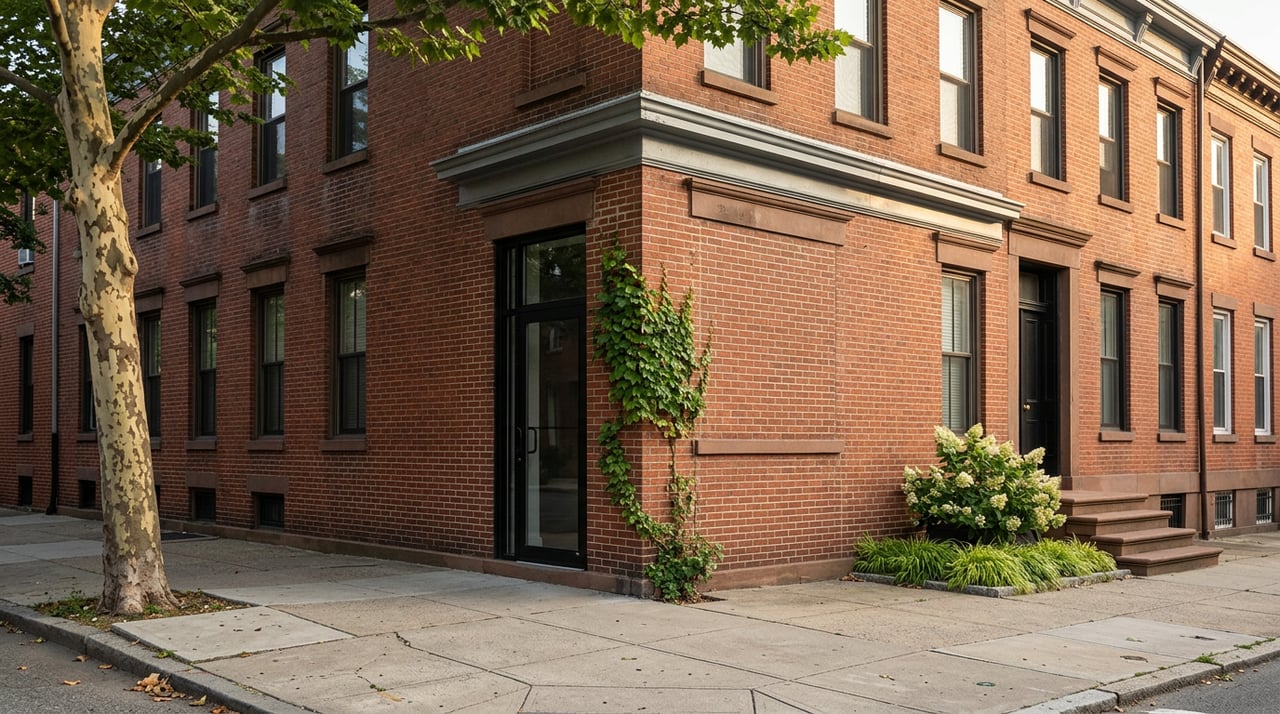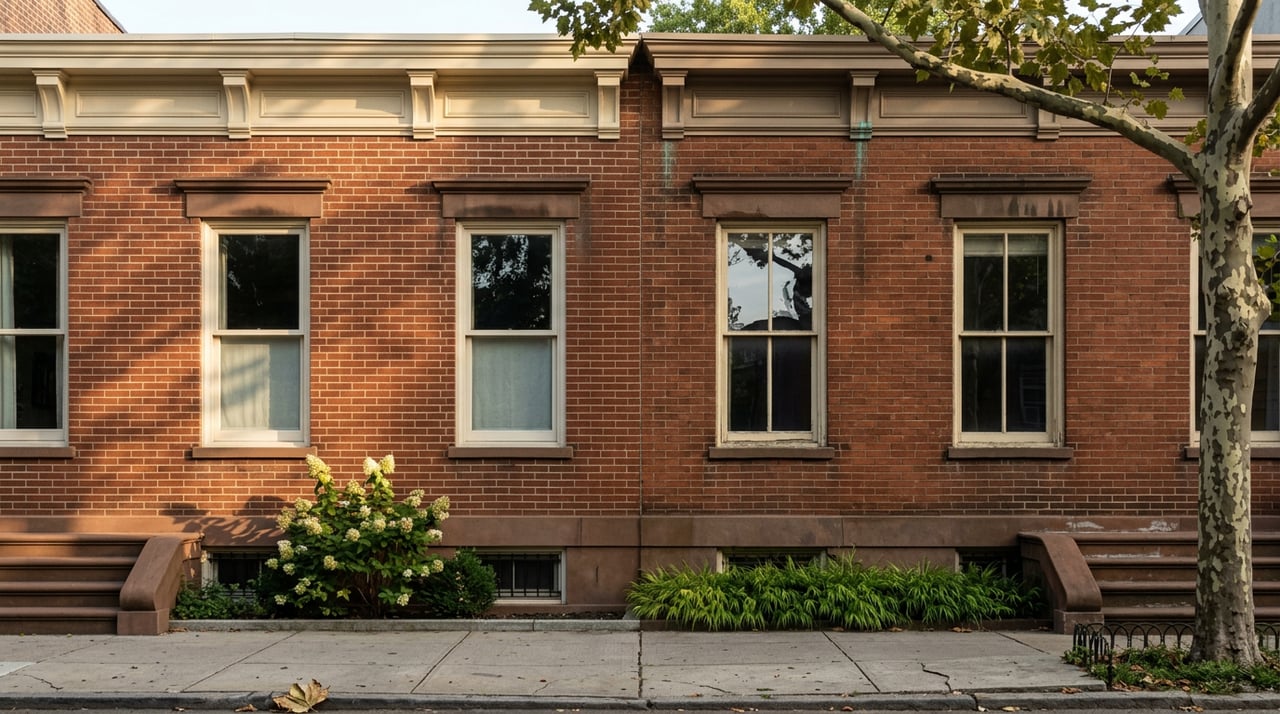
Two Bed-Stuy brownstones on paper: same width, same year of construction, same subway stop, both trading in the low $2 millions. One sits on Hancock between Nostrand and Marcy. The other sits three blocks north, off the map. On the day the buyers close, they own very different assets.
The line that separates them was drawn by the New York City Landmarks Preservation Commission, and in the current market it is doing more work than most listing descriptions admit. Understanding where that line runs, and what it triggers when it does, is the difference between a March 2026 median price that looks like appreciation and a per-square-foot number that tells a quieter story.
The line most listings don't draw
Bed-Stuy has two overlapping landmark districts. Stuyvesant Heights was designated in 1971 and expanded in 2013, sitting roughly inside Tompkins Avenue, MacDonough Street, Stuyvesant Avenue, and Chauncey Street. The Bedford Historic District was designated on December 8, 2015, adding 824 more buildings under the commission's oversight. Its footprint runs from Bedford Avenue to Tompkins Avenue and Monroe Street to Macon Street, covering most of Madison, Putnam, Jefferson, Hancock, and Halsey between Nostrand and Marcy, plus parts of Arlington Place and Verona Place.
That designation is not decorative. If a property sits inside either district, most exterior work visible from a public way requires LPC approval before the Department of Buildings will issue a permit. A block outside the line and the same work is a straight DOB filing.
What "LPC approval" actually looks like
The commission uses three application paths, and the one your project falls into determines your schedule more than your contractor does.
- Permit for Minor Work (PMW). In-kind repointing, brownstone patching, and other restorative work that matches original materials. Staff-level review, no hearing. Complete applications are often decided in about ten business days, with a legal deadline of twenty.
- Certificate of No Effect (CNE). For work that needs a DOB permit but does not adversely affect protected features: interior renovations that require DOB permits, plumbing and heating equipment, rooftop mechanical, ramps. Staff-level, typically decided in about ten business days, with a legal deadline of thirty.
- Certificate of Appropriateness (COA). Hearing-level review for anything altering protected features: removing a cornice, resizing openings, changing facade materials. Community consultation, longer timelines, and design revisions are common.
Owners routinely underestimate the reach of the CNE path. Review can come into play much earlier than owners expect, especially once exterior changes, DOB filings, or visible additions enter the picture. A gut renovation that never touches the facade can still land in front of LPC because the mechanical vents, the new plumbing risers, or the rear extension trigger it.
Filings move through the LPC's Portico system, and the agency publishes a Rowhouse Manual specifically for townhouse owners that spells out the visual standards its staff applies.
The number in the March 2026 data most buyers are missing
Look at what Redfin reported for Bed-Stuy last quarter and the split becomes obvious. In March 2026, Bed-Stuy home prices sold for a median of $1.6M, up 33.5% year over year, with average days on market at 112 compared with 77 a year earlier. In the same window, the median sale price per square foot was $764, down 23.8% since last year. Zillow's index for the same neighborhood in April 2026 shows an average home value of $953,646, down 4.2% over the past year. The two indexes measure different things, but they point at the same friction.
A rising median with a falling per-square-foot number and a longer market time is not a booming neighborhood. It is a neighborhood where the fully-restored, permit-clean, landmark-compliant townhouses are still finding buyers quickly at the top of the range, while the estate-condition and mid-renovation stock in and around the historic districts is sitting.
The condition bands published by local operators map cleanly onto this. Turnkey renovated brownstones tend to trade between $950 and $1,150 per square foot. Homes with dated finishes or investor-grade updates trade closer to $750 and $900 per square foot. Full-gut candidates get priced by subtracting projected renovation costs of $350 to $500 per square foot from an end-value that the buyer, not the seller, gets to define. Inside the landmark line, the middle band gets thinner. A moderately updated house needs either a discount that reflects the LPC schedule risk the next owner is inheriting, or a documented permit history that removes it.
Two Bed-Stuy listings featured in Brownstoner's July 5, 2026 top ten illustrate the two sides of that line: an estate-condition brownstone on Hancock Street asking $2.65M with intact period detail, and a recently updated Queen Anne on Chauncey Street with a garden rental asking $2.295M. The premium on completed, compliant work is the market pricing certainty, not square footage.
What sellers on a landmarked block should prepare before listing
Preparation on these blocks is a paperwork exercise as much as a staging one. Buyers who have already lost a bid on one Bed-Stuy house arrive at the next showing with a specific list of questions, and the seller who can answer them in the first week gets a cleaner negotiation.
The elements a listing team should have ready before the first open house:
- A designation confirmation. The LPC's official map answers whether the address sits in Stuyvesant Heights, its 2013 extension, the Bedford district, or none of the above. Assumptions based on the cross streets alone are wrong often enough to matter.
- A permit history pull. Any exterior work done in the last fifteen years should have a DOB filing and, if applicable, an LPC approval attached to it. A nice-looking update is not enough if it was not properly approved, and a diligent buyer's attorney will find the gap.
- Certificate of Occupancy or a Letter of No Objection. Buildings built before 1938 may not have a Certificate of Occupancy unless later alterations changed the use, egress, or occupancy, and a Letter of No Objection may be used to confirm legal use in some cases. For two-, three-, and four-family Bed-Stuy row houses, the legal unit count on paper is a live issue in almost every deal.
- A facade condition note. Portland cement repointing done by a prior owner on soft, century-old brick is a specific red flag that surfaces in inspection and can shave weeks off a schedule if it needs to be addressed at closing rather than during due diligence.
Owners of landmarked buildings should also know that the LPC's Historic Preservation Grant Program offers grants of roughly $10,000 to $30,000 for facade restoration for income-eligible owners of landmarked buildings, and that some owner-occupied historic residences may qualify for a New York State 20% historic homeownership rehabilitation tax credit if the property and project meet program requirements. Neither program closes on the seller's timeline, but both influence how a buyer underwrites the next five years of ownership.
What buyers should ask before the second showing
A buyer touring a Bed-Stuy brownstone in the current market has more leverage than the headline median suggests, but only if they use it in the right order. The questions that matter most are ones a listing agent should be able to answer on the spot:
- Is the address inside a designated historic district, and which one?
- Was the most recent exterior work filed with LPC as a PMW, CNE, or COA, and is the sign-off in the DOB record?
- If the windows are new, do the street-facing sashes match the original profiles? The commission typically requires that street-facing windows match the original profiles, and many owners restore the original wood sashes and add interior storm windows instead, which reads very differently at inspection than off-the-shelf vinyl.
- If the mechanicals were updated recently, was that a heat-pump conversion? Local Law 154 is phasing out fossil-fuel equipment in new construction and gut renovations, and for brownstones that increasingly means heat pumps, which changes both the operating cost and the design freedom on any future renovation.
- If a rear extension is planned, is the design likely to sit inside a staff-level CNE path or is it heading to a hearing?
That last question is where months disappear. A design that respects LPC's Rowhouse Manual can often clear at staff level. A design that ignores it can add a hearing cycle and a revision round to the front end of a project that the buyer thought started at closing.
FAQ
How do I check whether a specific Bed-Stuy address is landmarked? The LPC's designation map on nyc.gov is the primary source, and it is worth confirming before making an offer. Cross-street assumptions are unreliable because both the Bedford Historic District and the Stuyvesant Heights extension have irregular boundaries that skip individual buildings.
Does interior renovation trigger LPC review? Not on its own. Interior work generally does not need LPC review unless it requires a DOB permit, affects the exterior, or involves a designated interior landmark. Once a DOB permit is in play, the CNE path often applies even for work that never touches the facade.
Are more Bed-Stuy blocks likely to be designated? Advocates have long pursued designations for Stuyvesant East, Stuyvesant North, and Stuyvesant West. The Bedford district itself took years to move from public hearing in January 2013 to unanimous designation in December 2015, so buyers today should assume the map may grow, not shrink.
Does landmark status help or hurt resale value? It does both, and which effect dominates depends on the buyer pool for that specific block. Documented, compliant work tends to trade at a premium in landmarked districts because the buyer inherits certainty. Unpermitted or non-conforming work tends to trade at a wider discount inside the line than outside it.
If you are weighing a Bed-Stuy brownstone in or near one of these districts and want a clear read on how the landmark line changes the numbers on a specific address, the Dima Lysius Team works these blocks every week and can walk through the permit history, the pricing bands, and the preparation calendar with you. Contact us to start the conversation.